Aircraft Meaning - An airplane is a vehicle that can fly by receiving support from the atmosphere. It creates the force of gravity using static lift or active airfoil lift,
Or in some cases, recoil from jet engines. Common examples of aircraft include airplanes, helicopters, airplanes (with pilots), gliders, paramotors and hot air balloons.
Aircraft Meaning
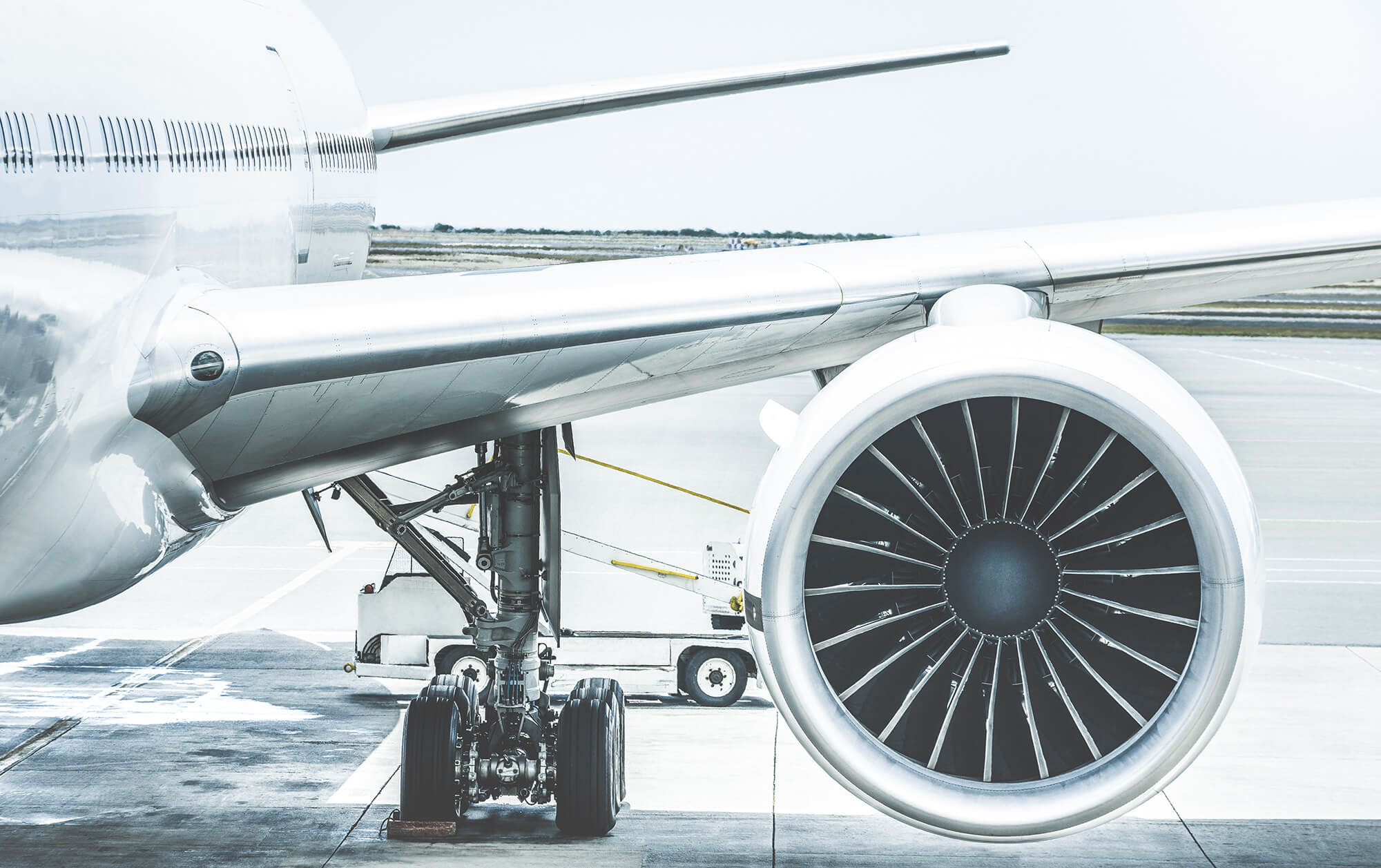
Human activity involving airplanes is called aviation. The science of aviation, including the design and construction of aircraft, is called aeronautics. Piloted aircraft are controlled by an on-board pilot, but can be remotely piloted or controlled by on-board computers. Airplanes can be classified according to different types such as lift type, flight control, usage and more.
The Common Turn
Flight models and the history of human flight involve many scientists; however, the first human asct - and safe desct - was made in this era using large hot air balloons built in the 18th century. Each of the two world wars led to advances Great technology. As a result, the history of aviation can be divided into five periods:
Balloons use buoyancy to float in the air just like ships float on water. They are characterized by one or more cells or canopies filled with a low density gas, such as helium, hydrog, or hot air, which is less dense than the surrounding air. When this weight is added to the weight of the aircraft, it adds up to a weight equal to the air displaced by the engine.
Small hot air balloons, called sky lanterns, were first invented in ancient China before the 3rd century BC and were widely used in cultural celebrations and were only the second form of flying aircraft, the It was originally a dog, which was first invented in ancient China. more than two thousand years. (See Han Dynasty)
A balloon was originally an aerostat, although the term airship was used for designs of large powered aircraft - usually with fixed wings.
Se Aeronautics Designs Six Wing Low Carbon Plane Of The Future
In 1919, Frederick Handley Page reported that "airships" were similar to small vehicles such as "air yachts".
In the 1930s, large international passenger ships were called "airships" or "flying ships".
- although none have been built yet. The advent of powerful balloons, called dirigible balloons, and later fixed fuselages that allowed for a large increase in size, began to change the meaning of these words. Large powerful aerostats were developed, characterized by a rigid outer structure and a separate aerodynamic envelope surrounding the gas bags, the largest and most famous of which were the Zeppelins. There are no fixed planes or unsteady balloons that can be called airplanes, so "airship" is synonymous with these planes. Some accidents, such as the Hindburg disaster of 1937, led to the deaths of these aircraft. Today, a "balloon" is an unpowered aerostat and an "airship" is used.

It's called a strong and steerable aerostat. Sometimes the term is applied to unsteady balloons, and sometimes dirigible balloon is taken to describe an aircraft (which can be stable or unsteady). A clean aerodynamic gas bag with sealing surfaces on the back. These airships were soon discovered. During World War II, this method was used mainly for fixed balloons; in the wind this will reduce the weight of the rope and stabilize the balloon. The airship moniker was adopted with style. Today, every small boat or boat is called a flying boat, although the plane and the power can not be released.
A New Airbus Plane? What It Would Mean For Boeing, Raytheon, Ge
Heavier-than-air vehicles, such as airplanes, must find a way to push the air or gas downwards in order to achieve a reaction (according to the laws of Newtonian motion) to push the plane upward. This dynamic movement in space is the origin of the word. There are two ways to achieve power lifting - aerodynamic lifting and power lifting in the form of a drill press.
Aerodynamic lift involving wings is the most common, with fixed wing aircraft being kept aloft by the movement of the wings and rotorcraft using rotating rotors in the form of wings, sometimes called "rotary wings". An airfoil is a flat, wide airfoil, usually shaped in cross-section like a wing. To fly, air must flow over the wing and create lift. A simple belt is a belt made of fabric or thin material, often stretched over a solid frame. The kite is attached to the ground and depending on the speed of the wind on its wings, it can be flexible or stable, stable or rolling.
With the power up, the aircraft steers its vertical axis downwards. V/STOL aircraft such as the Harrier jump jet and the Lockheed Martin F-35B take off and land vertically using power lift and changing aerodynamic lift in continuous flight.
A pure rocket is not usually considered an aerodyne because it does not rely on air for lift (and can fly in space); however, many aerodynamic lift vehicles are powered or supported by rocket engines. An important case is rocket-launched missiles, which achieve aerodynamic lift at very high speeds due to the flow of air over their bodies.
Pilots Have Their Own Secret Language. Here's What They Mean
The first fixed-wing aircraft was the hang glider. While a fixed-wing aircraft relies on its forward speed to create air over the wings, a kite is anchored to the ground and relies on the wind blowing over its wings for lift. Kites were the first type of aircraft to fly and were invented in China around 500 BC. Before there were test planes, wind turbines, and computer modeling software, a lot of aerodynamic research was done with kites.
The first heavier-than-air craft that could control free flight were gliders. George Cayley made the first flight in 1853.
A fixed-wing aircraft (plane or airplane) was invented by Wilbur and Orville Wright. In addition to the type of propulsion, fixed-wing aircraft are characterized by their wing configuration. The main features of the wing are:

A flying wing has no body, although it may have small buds. The side is a lifting body, it has no wings, although it has very little stability and control.
Aviation Maintenance Safety
It can "fly" close to the surface of the earth or water, just like conventional airplanes in flight. An example is the Russian ekranoplan called "Caspian monster". Human-powered aircraft rely on the end of the world to stay in the air with little control power, but that's only because of the lack - the truth is, a kite can fly high .
Rotorcraft or rotary-wings use a motorized rotor with a rotary wing section to provide lift. Helicopters, autogyros, and various hybrids such as gyroplanes and compound rotorcraft.
Helicopters have a rotor that can be turned by a motor. The rotor pushes the air down and creates lift. By tilting the rotor forward, the downward flow is deflected backward, creating a thrust for forward flight. Some helicopters have more than one rotor and others are driven by gas nozzles at the corners. There is also a tail rotor that counteracts the rotation of the main rotor and helps in directional control.
Autogyros have unpowered rotors with a separate power supply to provide thrust. The rotor is turned backwards. As the autogyro moves forward, air flows over the rotor, causing it to spin. This centrifugation increases the speed of the air flow through the rotor allowing for lift. Rotor kites are powered autogyros that are not towed to give them speed or are anchored to a strong wind anchor for flying.
Making Net Zero Aviation Possible
A compound rotorcraft has wings that provide some or all of the lift in forward flight. Today, they are classified as powered lift and not rotorcraft. Tiltrotor aircraft (such as the Bell Boeing V-22 Osprey), tiltwing, tail-sitter and coleopter aircraft have their rotors/propellers horizontal for vertical flight and vertical for forward flight.
The largest aircraft by size and volume (as of 2016) is the 302 ft (92 m) long British Airlander 10, a fixed-wing aircraft that is said to be capable of speeds of up to 90 mph (140 km/h). h; 78 kn) and an air endurance of two weeks with a load of up to 22,050 lb (10,000 kg).
, which is the Antonov An-225 Mriya. This 1980 Ukrainian six-engine Russian transporter was 84 m (276 ft) long with a wingspan of 88 m (289 ft). It carries 428,834 lb (194,516 kg) of cargo, holds the world payload record and has flown 100 t (220,000 lb) of cargo commercially. With a maximum weight of 550–700 t (1,210,000–1,540,000 lb), it was the heaviest aircraft ever built. It can travel at a speed of 500 mph (800 km/h; 430 kn).

The largest military aircraft are the Ukrainian Antonov An-124 Ruslan (the second largest aircraft in the world, also used as a civilian transport),
Agricultural Plane In Yellow. Letters With Ddr Sqr Means Gdr Sqr Editorial Photo
Eight-engine, piston/propeller Hughes H-4 Hercules "Spruce Goose" - American WWII wooden flying boat with a wingspan (94 m/260 ft) longer than conventional airplanes and a tail height e the same as the tallest (Airbus A380-800 at 24.1m/78ft) - flew only one short flight in the late 1940s and never flew beyond the end of the world.
The largest civilian airliner yet
Atr aircraft meaning, galley in aircraft meaning, aircraft lights meaning, aircraft meaning in urdu, aircraft mechanic, aircraft insurance, aircraft, aircraft tail number meaning, aircraft management, aircraft mechanic meaning, aircraft ownership, aircraft meaning in hindi

0 Comments